

Threaded by Necessity: The Fascinating History Behind Patchwork
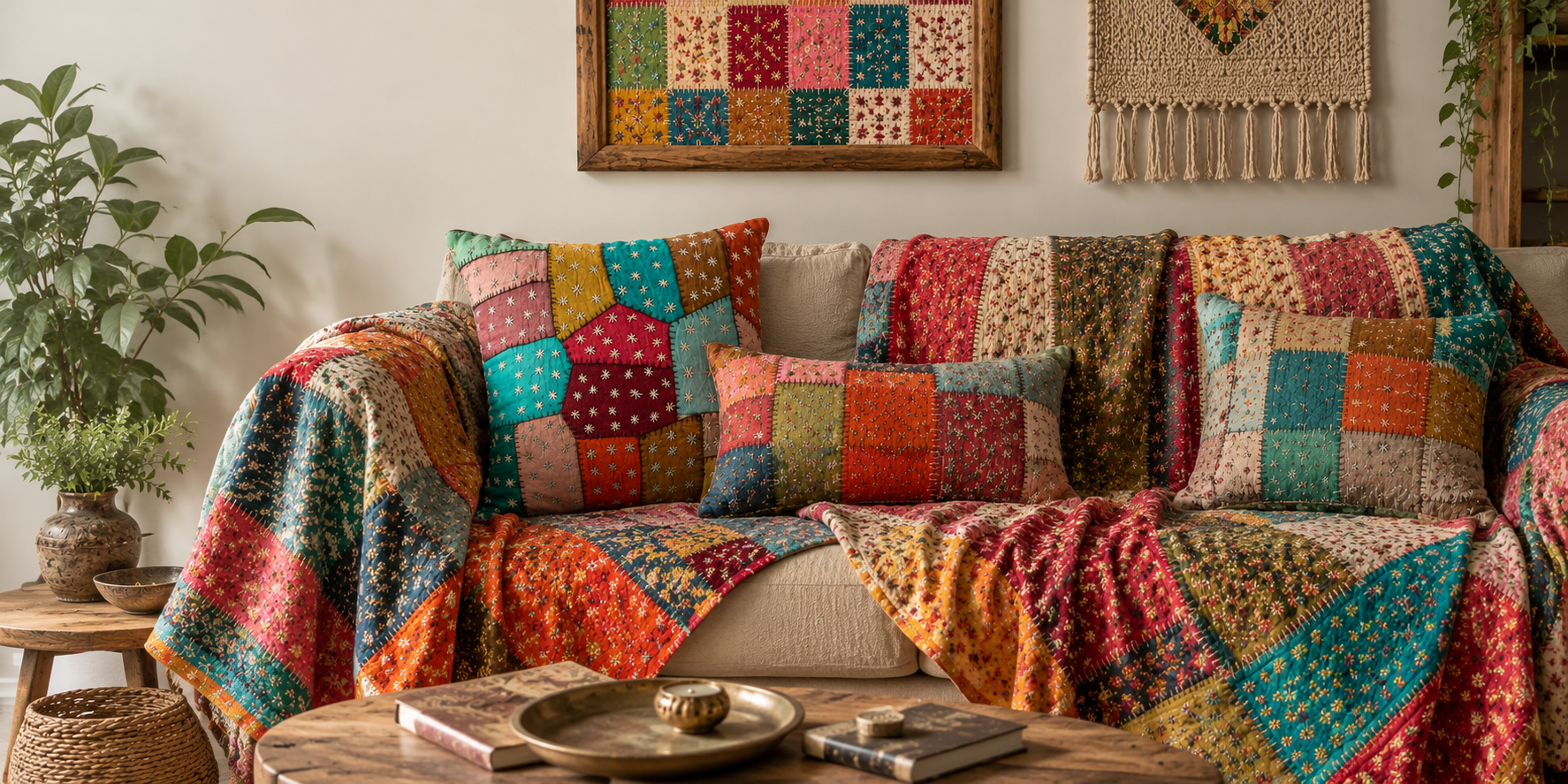
Have you ever looked at a beautifully vibrant patchwork quilt or garment and wondered how this unique style came to be? While it is celebrated today as a beloved craft and a staple of bohemian fashion, the history of patchwork is actually rooted in economic warfare, high-stakes smuggling, and pure British ingenuity.
The Indian Cotton Revolution
Our story begins in the 16th century when cotton imported from India first arrived on English shores. It was an overnight sensation. Unlike the heavy, drab wool and linen locally produced in England, Indian cotton was incredibly bright, lightweight, and adorned with exquisite decorative embroidery.
It didn’t take long for Indian cotton to conquer the market, completely sidelining domestic textile producers. Everyone wanted a piece of this vibrant new fabric.
The 1712 Ban: Protectionism and Smuggling
The British government quickly realized that local factories were struggling to stay afloat against this foreign competitor. To protect domestic manufacturers, the government took a drastic step: in 1712, a law was passed completely banning the import of fabrics from India.
But you can't stop fashion with a decree. Demand for the material didn't vanish; it just went underground. Cotton continued to flow into England, but now it arrived via smugglers—and at astronomically high prices.
Because the smuggled fabric was incredibly expensive, every single scrap of cotton became a precious commodity. Not a single millimeter could go to waste.
The Birth of Patchwork
This extreme scarcity gave birth to what we now know as patchwork quilting and sewing. To maximize their expensive, smuggled textiles, resourceful crafters began saving even the tiniest remnants of fabric. They took these small, brightly colored scraps and meticulously stitched them together to create entirely new, unusually vibrant, and beautiful items. What started as a desperate measure to stretch a forbidden luxury item turned into a brand-new artistic tradition.
Patchwork Today
The next time you see a patchwork design, remember that it isn't just a cozy pattern—it is a living piece of history. It stands as a testament to human creativity, showing how strict government bans and exorbitant prices accidentally created one of the most enduring textile arts in the world.